In any industrial workplace, the flooring needs to be strong enough to handle heavy traffic throughout the day. For areas in factories, warehouses, workshops, construction sites, power plants and processing plants where there is moisture, oil, machinery and continued foot traffic, normal flooring may not always be suitable. For such needs, chequered plates are a practical alternative.
Chequered plates are also known as checker plates or diamond plates. These are sheets of metal that are manufactured with a raised pattern on their surface.
WHAT ARE CHEQUERED PLATES?
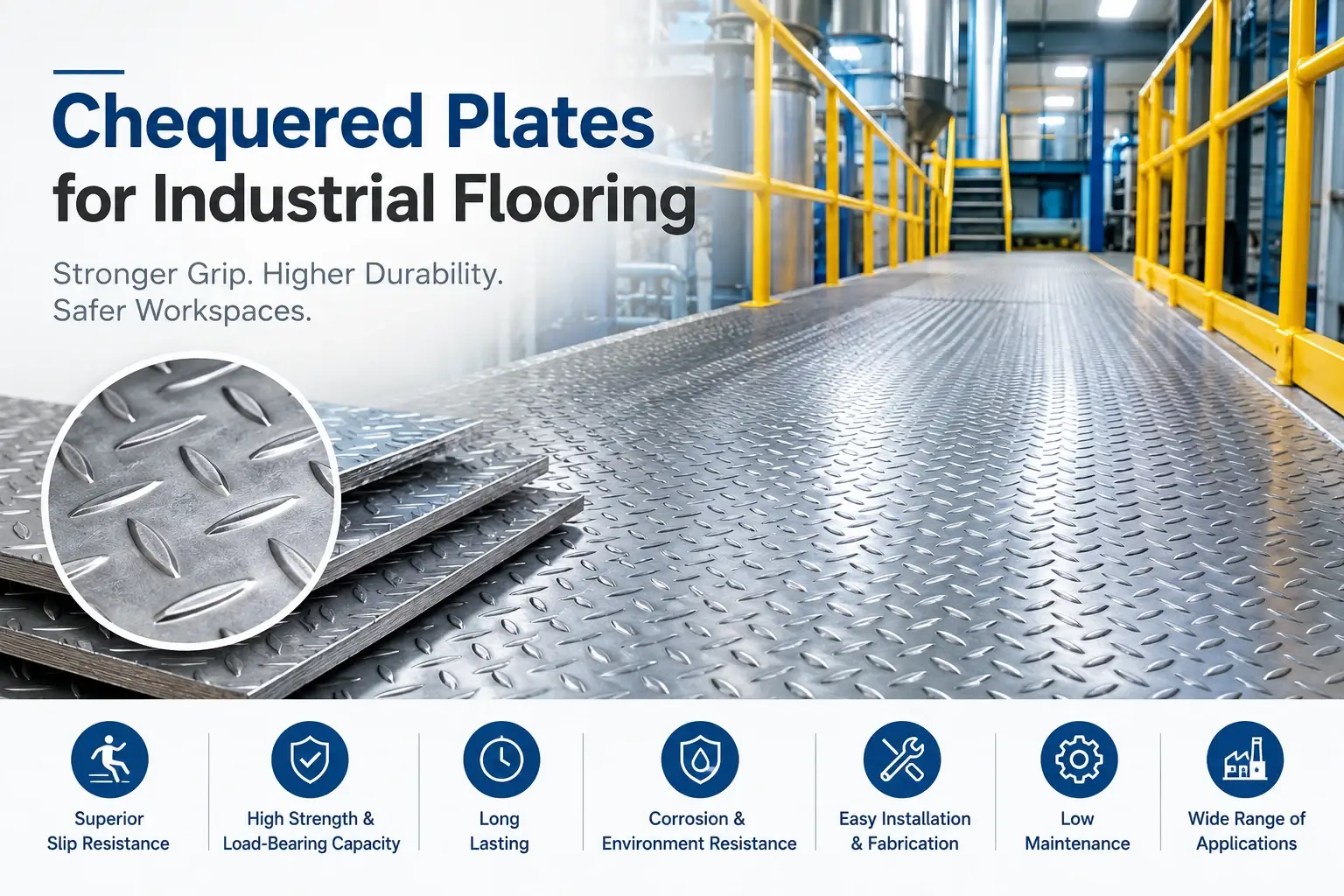
Chequered plates are metal sheets with a raised diamond or other pattern on one side. The elevated surface will assist in elevating the friction and will lessen the possibilities of slipping.
They are usually made of:
Material choice depends on application, environmental conditions, required strength and expected load.
BETTER SLIP RESISTANCE
One of the great things about checkered plates is that they give better traction. The raised pattern creates more points of contact between the shoe and the floor. This is particularly helpful in industrial settings where floors may become wet or oily. Workers who walk around machinery, or carry materials, need a surface they can trust to give them footing.
Therefore, the correct selection and placement of checkered plates can help to reduce the chances of slips and falls.
HIGH STRENGTH AND CAPACITY OF LOAD-BEARING
Industrial flooring often is called upon to support workers, equipment, tools, carts and other heavy loads. We have checkered plates of different thicknesses and materials to suit different load requirements.
Steel checkered plates, especially, are capable of providing excellent strength and durability in harsh applications.
They can be used for:
The thickness of the plate should always be chosen according to the expected load and support arrangement.
LONG LASTING
The industrial flooring is subject to constant movement, impact, vibration and heavy traffic. But you need a flooring material that can stand up to these conditions without being replaced every two weeks.
Chequered plates are intended for demanding environments and can last a long time when the right material and thickness are chosen. They are also very durable and suitable for use in places where the floor is subject to mechanical loads from time to time.
IDEAL FOR WET AND DIFFICULT ENVIRONMENTS
Factories and industrial facilities may have water, oils, chemicals, dust and other materials. These conditions can affect standard flooring materials. Depending on the material used, chequered plates can offer quite good resistance to environmental conditions. For example, stainless steel and aluminum chequered plates are useful where corrosion resistance is important.
In humid or outdoor environments, the choice of plate with sufficient protection against corrosion is of special importance.
EASY TO INSTALL AND FABRICATE
Another advantage of chequered plates is that they are flexible during assembly. Metal plates can be cut, shaped, drilled, welded and fixed to meet the requirements of a particular project.
This makes them suitable for a number of floor plan and walkway designs.
They can be fitted as:
The flexibility of their fabrication can ease installation in new construction and industrial renovation projects.
LOW MAINTENANCE NEEDS
Industrial flooring should ideally require little maintenance. The surface structure of checkered plates is relatively simple and they can usually be cleaned by suitable industrial cleaning methods. Keeping surfaces clean helps to remove dust, oil, grease and other material that can reduce traction.
The maintenance requirements can also vary depending on the material of the plate.
IMPROVED WORKPLACE SAFETY
Safety is a major consideration in the design of industrial facilities. Walkways and platforms are commonly used by employees who need to get around in and around machinery, production areas, and work areas above the ground.
Chequered plates can offer a better grip as opposed to a smooth metal surface because of their raised pattern. Using chequered plate flooring combined with the right handrails, lighting, drainage and other safety measures can also help you create a safer working environment.
But the plates are no substitute for good workplace safety practices.
MULTI-APPLICATIONS
Chequered plates are useful in many industries because of their strength, grip and fabrication flexibility.
Typical applications are:
Depending on the material and the surface protection, they can be used indoors and outdoors.
PROFESSIONAL AND FUNCTIONAL LOOK
Chequered plates are also clean and industrial looking and have more than just practical uses. A raised pattern in a constant gives a structured look to platforms, walkways and staircases.
Aluminum and stainless-steel versions can be particularly well suited for applications where appearance is another concern. The finish can be chosen as per the requirement of the facility.
HOW TO CHOOSE THE RIGHT CHEQUERED PLATE
Always make sure that the chequered plates you choose meet the following considerations.
CONCLUSION
Chequered plates are a practical and versatile solution for industrial floors and walkways. This kind of surface offers much better grip and is built to tolerate tough working conditions. Whether you are building platforms, stairs, or ramps, they must meet the exact needs of the project.
Getting the right material, thickness and finish can help industries create flooring systems that are more durable, more functional and easier to maintain. Checkered plates work well for facilities where the flooring needs to be safe, strong and perform well over the long term.