


If you stand near a building site early in the morning, you will hear the clanking of metal long before you see anything. That sound usually comes from steel sheets being lifted, dragged, or cut. At Somani Ispat, we hear this sound every day. It may look like just another piece of metal, but a hot-rolled steel sheet carries a lot more purpose than most people notice.
Let’s explain it the way people in our warehouses understand it—simple, clear, and practical.
What is a hot-rolled steel sheet, exactly?
Picture a giant block of steel. It goes into a furnace and turns bright red—hot enough to soften. Once it’s ready, the block passes through heavy rollers. These rollers squeeze the metal again and again until it spreads out as long, wide sheets. This process involves no fancy machinery. Just heat, pressure, and a lot of force.
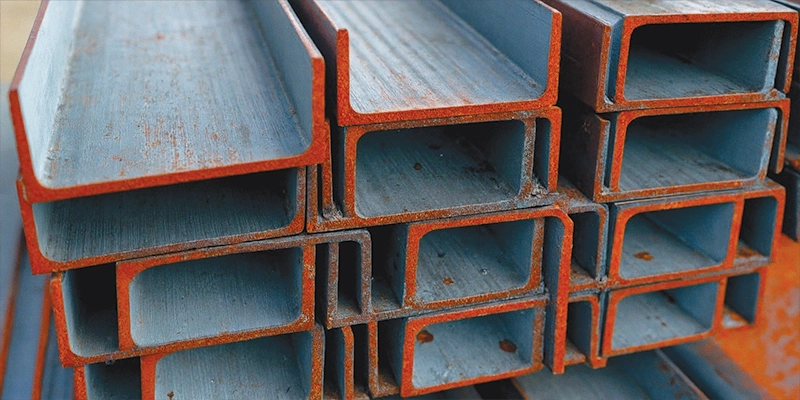
When the sheet cools in the open air, the surface becomes a bit rough and dark. Anyone who has seen a fresh HR sheet knows this classic look—the faint scaly texture, slight marks from rollers, and a deep, solid feel.
Thus, to put it simply:
A hot-rolled steel sheet is formed at very high temperatures and then cooled naturally. That’s it. There is no intricate process involved.
We handle these sheets every single day, and knowing how they behave helps people pick the right one.
How Does Hot-Rolled Steel Behave?
These are traits we notice in real work, not from a textbook:
- Strong enough to carry heavy loads
- Easy for fabricators to cut or bend
- Comes in big sizes without weird shape issues
- Not bothered by small surface marks
- Costs less than cold-rolled sheets
- Works well for tough, outdoor structures
When people talk about hot-rolled steel properties, they often miss the practical side. What matters is that the sheet doesn’t crack easily, doesn’t fight the tools, and stays reliable under stress.
Where are these sheets used in real projects?
Walk into any fabrication unit or construction site in Telangana or Andhra, and you’ll see stacks of HR sheets lying around. They get used in more places than most people expect.
Some common hot-rolled sheet uses include:
- Building frames, columns, platforms
- Bridges and flyover structures
- Trucks, trailers, and railway wagons
- Ship parts and marine plates
- Heavy machinery frames
- Storage tanks and industrial containers
- Workshop fabrication jobs
Sometimes, a customer comes to our Balanagar yard with a simple sketch on paper. They point at a size and ask, “Will this thickness work?” Most of the time, an HR sheet does the job without fuss.
HR Sheet Price in India! Why does it keep changing?
If there is one question we hear almost every day, it is this:
“What is the HR sheet price in India today?”
The honest answer: it moves often. Steel does not have a fixed MRP. A few things push the price up or down:
- The sheet’s thickness
- Grade
- Brand (SAIL, JSPL, etc.)
- Transport distance
- Demand in the construction season
- Global steel prices
As a large stockist, we track price shifts closely. When buyers ask us, we give the latest price, not a guess from last week. Steel rates change like the weather—fast and without warning.
Hot-Rolled vs Cold-Rolled Steel! (A Simple Difference)
People often confuse these two. Here is the shortest and clearest way to look at it:
Hot-Rolled Steel:
- Made at a high temperature.
- Slightly rough surface
- The finish is imprecise.
- Strong and flexible
- Better for heavy structural work
Cold-Rolled Steel:
- Finished at room temperature
- Smooth and shiny
- Very accurate thickness
- Higher price
- Used for detailed or visible parts
If you want a product that needs to "look perfect", you should choose cold-rolled steel. If you want something that must “work hard”, you pick hot rolled.
Why Does Somani Ispat Talk About This Material?
We have been dealing with steel for more than three decades. When you stay in the same line for so long, you learn things that no classroom can teach. Every sheet that enters our warehouse is checked, measured, stacked, and moved by people who know steel by touch.
Somani Ispat works with branded steel from well-known mills—SAIL, JSPL, RINL/VSP, and others. We keep a large paid-up stock, sometimes more than twenty thousand tonnes at a time. This helps our buyers get quick dispatch, a steady supply, and authentic material.
When someone asks us about hot-rolled sheets, we don’t speak as marketers. We speak as people who have loaded these sheets during hot afternoons, inspected them during night shifts, and supplied them to hundreds of projects.
This is why the details matter to us. A wrong grade or wrong thickness can delay a site by days. A solid sheet can keep a project steady. That is the kind of experience Somani Ispat stands on.
What Makes Somani Ispat Different?
- We have stayed only in steel for three decades. No side businesses, no experiments.
- Stock is usually available at the yard, not just shown on paper or promised later.
- Material comes from known mills, so buyers don’t have to question quality later.
- Sheets are checked and handled at the warehouse before dispatch, not blindly moved.
- Rates are shared as per the day’s market, not copied from old price lists.
- We understand what local fabricators and sites actually use, not just what is written in catalogues.
Small Incidents That Stay with Us
A thickness change that helped
A customer once planned to use a thinner sheet to save cost. After discussing the job and load, he switched to a slightly thicker HR sheet. This change prevented bending issues after installation and saved the customer from having to redo the work.
A last-hour dispatch
Once, material was needed urgently to keep a site running. The sheets were arranged, checked, and sent late in the day. Work resumed the next morning. No follow-ups, no excuses.
FAQs
It depends on the thickness, grade, and mill. Prices rise and fall often, so daily rates are the most accurate.
Yes. Builders prefer it for frames, platforms, and load-bearing parts.
They can if left uncoated. Most users paint or weld them based on need.
Most buyers choose between 1.6 mm and 20 mm, but mills produce much thicker plates too.
Conclusion
A hot-rolled steel sheet may look simple, but it carries the strength that holds modern structures together. When you know what it is and how it behaves, choosing the right material becomes easier. At Somani Ispat, we share this knowledge because good steel and good guidance should always help someone build better.
